

Embedded Video | Treasury Yields and Market Pressure | 임베디드 영상 | 국채금리 상승과 시장 압박 확대
How strong US economic activity, rising Treasury yields, and expanding antitrust pressure are reshaping global market sentiment.
강한 미국 경제 활동과 국채금리 상승, 플랫폼 규제 확대가 글로벌 시장 심리를 어떻게 재편하고 있는가.
Treasury Yields | 강한 경제와 금리 압박의 충돌
Treasury Yields 흐름은 다시 글로벌 금융 시장의 핵심 변수로 부상하고 있다.
미국의 기업 활동은 2년 만에 가장 빠른 속도로 확장되고 있으며 서비스 소비 역시 예상보다 견고하게 유지되고 있다.
문제는 바로 이 강한 경제 흐름이 시장에 새로운 부담으로 작용하기 시작했다는 점이다.
시장은 경기침체 가능성보다 오히려 금리 인하 지연 가능성을 더 두려워하기 시작했다.
강한 경제 데이터는 연준이 긴축 정책을 더 오래 유지할 가능성을 높이고 있으며, 이에 따라 국채금리는 다시 상승 압력을 받고 있다.
다우지수는 40,000선 아래로 하락했고 투자 심리는 다시 금리 민감 국면으로 이동하고 있다.
동시에 미국 정부는 Live Nation과 Ticketmaster를 대상으로 플랫폼 독점 구조에 대한 반독점 압박을 확대하고 있다.
이는 단순 엔터테인먼트 산업 규제가 아니라 플랫폼 지배력과 소비자 가격 통제 구조 전반에 대한 경고로 해석되고 있다.
현재 시장은 AI 자본 확대와 소비 회복, 높은 금리, 규제 압박이 동시에 충돌하는 복합 구조로 이동하고 있다.
이번 D’all Economy Brief는 강한 경제가 오히려 시장 부담으로 전환되는 글로벌 금융 시스템 구조를 분석한다.
Treasury Yields Rise as Strong Economy Delays Rate Cuts
Treasury Yields are once again becoming one of the most important drivers of global financial-market volatility.
US business activity accelerated to its highest level in more than two years, while services demand and consumer activity remained stronger than expected.
The problem for markets is that stronger economic momentum now reduces expectations for near-term Federal Reserve rate cuts.
Investors increasingly believe that the Fed may maintain elevated interest rates longer than previously expected.
As a result, Treasury yields climbed again and major equity indexes weakened across Wall Street.
The Dow Jones Industrial Average fell below the critical 40,000 level as markets repriced future liquidity expectations.
Meanwhile, the Department of Justice and multiple US states intensified antitrust pressure on Live Nation and Ticketmaster.
This signals that Washington is increasingly targeting platform dominance, pricing power, and concentrated consumer-control systems.
Markets are now entering a phase where AI expansion, higher yields, consumer resilience, and political regulation coexist simultaneously.
Today’s D’all Economy Brief explores how strong economic momentum is increasingly transforming into financial pressure across global markets.
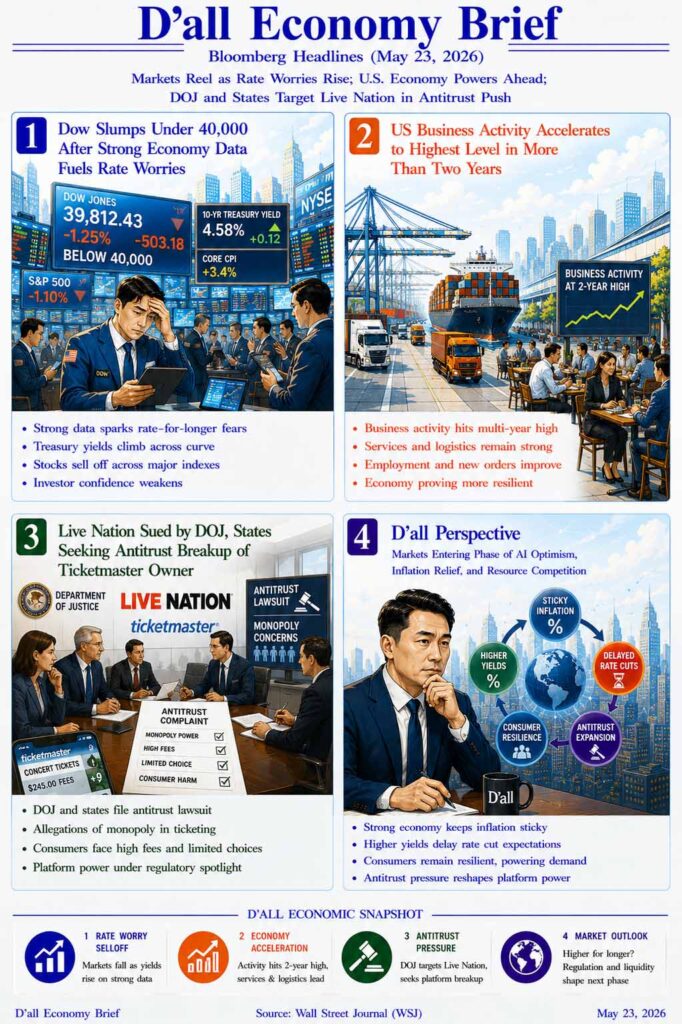
Treasury Yields | 금리 우려와 시장 매도 확대
Strong economic data pushed Treasury yields higher and triggered renewed fears that interest rates may remain elevated longer than markets expected.
Wall Street increasingly views strong economic momentum as a factor delaying liquidity easing.
Markets are no longer reacting only to recession risk.
They are increasingly reacting to the possibility that growth itself may keep monetary policy restrictive.
• Treasury yields rise again
• Dow falls below 40,000
• Rate-cut expectations weaken
• Investor pressure increases
강한 경제 데이터는 국채금리를 다시 끌어올렸고 시장은 금리 인하 지연 가능성을 반영하기 시작했다.
월가는 강한 경제 흐름 자체를 유동성 완화를 늦추는 변수로 해석하고 있다.
시장은 이제 경기침체 위험만을 반영하는 것이 아니다.
오히려 성장 자체가 통화정책 완화를 지연시킬 가능성에 반응하고 있다.
• 미국 국채금리 재상승
• 다우 40,000선 붕괴
• 금리 인하 기대 약화
• 투자 심리 압박 확대
Business Activity Accelerates | 미국 기업 활동 재가속
US services activity, logistics movement, and consumer demand continue outperforming expectations across multiple sectors.
Markets increasingly believe the US economy remains more resilient than previously anticipated.
This strength supports corporate activity, but it also complicates the path toward lower interest rates.
• PMI activity reaches multi-year high
• Consumer resilience remains strong
• Logistics activity improves
• Economic momentum expands
미국의 서비스 활동과 소비 흐름, 물류 움직임은 여전히 예상보다 강한 회복력을 유지하고 있다.
시장은 미국 경제가 생각보다 훨씬 견고하다고 판단하기 시작했다.
이러한 강한 흐름은 기업 활동을 지탱하지만, 동시에 금리 인하 경로를 더 복잡하게 만들고 있다.
• PMI 2년 내 최고 수준
• 소비 회복력 유지
• 물류 흐름 개선
• 경제 모멘텀 확대

Antitrust Expansion | 플랫폼 규제 확대
The DOJ lawsuit against Live Nation reflects growing efforts to challenge concentrated platform power and consumer pricing control.
Washington is broadening regulatory pressure beyond technology companies into entertainment and ticketing infrastructure.
The issue is not only ticket prices.
It is about who controls access, distribution, and consumer demand inside platform economies.
• DOJ expands antitrust pressure
• Ticketmaster monopoly concerns grow
• Consumer pricing criticism increases
• Platform regulation broadens
미 법무부의 Live Nation 소송은 플랫폼 지배 구조와 가격 통제력에 대한 압박이 확대되고 있음을 보여준다.
미국 정부는 기술 기업을 넘어 엔터테인먼트와 티켓 플랫폼 영역까지 규제 범위를 넓히고 있다.
문제는 단순한 티켓 가격이 아니다.
플랫폼 경제 안에서 누가 접근권과 유통, 소비자 수요를 통제하는가의 문제다.
• 반독점 압박 확대
• Ticketmaster 독점 논란 확대
• 소비자 가격 부담 비판
• 플랫폼 규제 범위 확장

D’all Perspective | 디올 관점
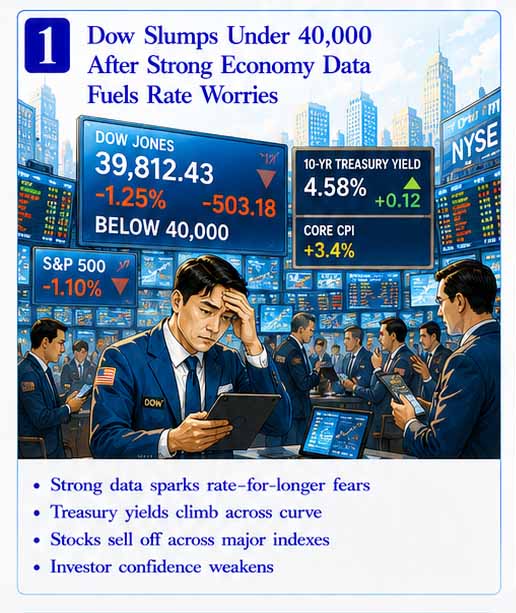
Markets are increasingly entering a phase where strong economic growth itself becomes a source of financial pressure.
The key issue is no longer whether the economy is weakening.
Instead, investors are beginning to fear that the economy may remain too strong for rapid monetary easing.
At the same time, Washington is intensifying pressure on platform concentration and pricing power across multiple industries.
• Strong economy keeps inflation sticky
• Higher yields delay rate-cut expectations
• Consumers remain resilient, powering demand
• Antitrust pressure reshapes platform power
시장은 이제 강한 경제 성장 자체가 금융 압박으로 전환되는 국면에 진입하고 있다.
핵심은 경제가 약해지는가가 아니다.
오히려 경제가 너무 강해서 연준이 쉽게 완화 정책으로 전환하지 못할 가능성이 중요해지고 있다.
동시에 미국 정부는 플랫폼 독점 구조와 가격 지배력에 대한 압박을 확대하고 있다.
• 강한 경제가 인플레이션을 끈적하게 유지
• 높은 금리가 금리 인하 기대를 지연
• 견고한 소비가 수요를 지탱
• 반독점 압박이 플랫폼 권력을 재편
Mini Insight
Strong economies do not always support markets.
Sometimes they delay the liquidity markets desperately want.
강한 경제가 항상 시장 상승으로 연결되는 것은 아니다.
때로는 시장이 원했던 유동성 완화를 오히려 늦추기도 한다.
D’all Insight
Modern financial markets are increasingly entering a phase where strong economic momentum itself creates instability across asset pricing systems.
For much of the past year, investors expected weakening growth and slowing inflation to eventually support Federal Reserve rate cuts.
But recent US economic data is now challenging that assumption.
Business activity across services, logistics, and consumer sectors continues outperforming expectations.
The US economy is proving significantly more resilient than markets previously anticipated.
This resilience is helping sustain corporate demand, employment activity, and broader economic expansion.
However, stronger growth also creates a new financial problem.
If inflation pressure remains sticky while economic activity stays elevated, the Federal Reserve may delay liquidity easing much longer than investors expected.
As a result, Treasury yields are rising again and markets are beginning to reprice future borrowing conditions.
At the same time, another structural force is expanding beneath the surface.
Washington is increasingly targeting platform concentration and pricing power across multiple industries.
The DOJ lawsuit against Live Nation and Ticketmaster reflects broader political concern surrounding monopoly structures and consumer-cost control systems.
This means markets are now balancing multiple structural forces simultaneously:
AI capital expansion, higher-for-longer interest rates, consumer resilience, and political regulation.
The next global market cycle may therefore become increasingly defined not by pure liquidity expansion, but by how financial systems adapt to sustained economic strength under tighter monetary conditions.
현대 금융 시장은 강한 경제 흐름 자체가 자산 가격 시스템의 불안정성을 확대시키는 국면으로 이동하고 있다.
지난 1년 동안 투자자들은 경기 둔화와 인플레이션 완화가 결국 연준의 금리 인하로 연결될 것이라고 기대해왔다.
하지만 최근 미국 경제 데이터는 이러한 가정을 흔들기 시작했다.
서비스와 물류, 소비 부문의 기업 활동은 여전히 예상치를 웃돌고 있다.
미국 경제는 시장 예상보다 훨씬 강한 회복력을 유지하고 있다.
이러한 흐름은 기업 수요와 고용, 소비 활동을 동시에 지탱하고 있다.
하지만 바로 그 강함이 새로운 금융 부담을 만들고 있다.
경제 활동이 강한 상태에서 인플레이션 압력이 쉽게 낮아지지 않는다면 연준은 유동성 완화를 훨씬 늦출 가능성이 있다.
그 결과 국채금리는 다시 상승하고 있으며 시장은 미래 차입 비용을 다시 재평가하기 시작했다.
동시에 또 다른 구조적 변화도 확대되고 있다.
미국 정부는 플랫폼 독점 구조와 가격 지배력에 대한 압박을 강화하고 있다.
Live Nation과 Ticketmaster에 대한 소송은 단순 엔터테인먼트 뉴스가 아니라 소비자 가격 통제 구조 전체에 대한 경고에 가깝다.
즉 시장은 이제: AI 자본 확대, higher-for-longer 금리, 소비 회복력, 정치적 규제 확대 사이에서 복합적인 균형을 맞추고 있다.
다음 글로벌 시장 국면은 단순 유동성 확대가 아니라 강한 경제 아래에서 금융 시스템이 어떻게 적응하는가에 의해 결정될 가능성이 높아지고 있다.
One-line Insight
“This is not about recession fear.
It’s about markets fearing a strong economy.”
“지금 시장은 경기침체를 두려워하는 것이 아니다.
오히려 너무 강한 경제를 두려워하고 있다.”
D’ALL ECONOMIC SNAPSHOT
1️⃣ RATE WORRY SELLOFF
Markets weaken as strong economic data pushes Treasury yields higher.
강한 경제 데이터와 국채금리 상승으로 시장 약세 확대.
2️⃣ BUSINESS ACCELERATION
US services and consumer activity continue outperforming expectations.
미국 서비스·소비 활동이 예상보다 강한 흐름 유지.
3️⃣ ANTITRUST EXPANSION
Washington expands regulatory pressure on platform dominance.
미국 정부의 플랫폼 규제 압박 확대.
4️⃣ HIGHER-FOR-LONGER
Markets increasingly price in prolonged elevated interest rates.
높은 금리 장기화 가능성을 반영하는 시장 구조.
#TreasuryYields #FederalReserve #WallStreet #USBusinessActivity #RateCutExpectations #MarketLiquidity #Antitrust #LiveNation #Ticketmaster #HigherForLonger #MacroEconomy #ConsumerResilience #FinancialMarkets #WSJ #DallEconomyBrief
#미국국채금리 #연준 #월스트리트 #미국경제 #금리인하 #유동성 #반독점규제 #라이브네이션 #티켓마스터 #고금리 #거시경제 #소비회복 #금융시장 #WSJ #디올이코노미브리프
Source
Wall Street Journal (WSJ), May 23, 2026
Based on Wall Street Journal coverage regarding Treasury yields, US business activity acceleration, and antitrust pressure on Live Nation.
Content reconstructed and expanded for analytical insight by D’all Economy Brief.
- D'all Visual Intelligence
- D’all Public Design Intelligence
- D’all Motion Intelligence
- D’all Interaction Intelligence
- D’all Spatial Intelligence
- D’all Advertising Intelligence
- D’all Economy Brief
- D’all Food Intelligence
- D’all Health Insight
- D’all Global Power
- D’all Culture Hybrid
- D’all Knowledge Architecture
- D'all Capital History
- D’all Society Agenda
