

Earnings Cues | 실적 발표를 기다리는 시장의 숨 고르기
Earnings Cues는 7월 둘째 주 글로벌 금융시장의 핵심 키워드다. 투자자들은 새로운 상승 동력을 찾기보다 기업 실적이 제시할 방향성을 기다리며 관망세를 유지하고 있다.
최근 주요 지수는 큰 변동 없이 제한된 범위에서 움직이고 있으며 시장의 관심은 실적 시즌으로 빠르게 이동하고 있다.
기업의 실제 수익성과 향후 가이던스는 하반기 투자 전략을 결정하는 가장 중요한 변수로 평가된다.
중앙은행의 정책 변화 역시 여전히 글로벌 경제의 중심 변수로 남아 있다.
금리 방향과 인플레이션 흐름은 투자 심리를 결정하는 핵심 기준이 되고 있다.
한편 기술기업들은 AI 인프라 확장보다 실제 업무에 AI를 통합하는 전략으로 무게중심을 이동하고 있다.
AI는 이제 설비 경쟁보다 생산성과 운영 혁신의 도구로 진화하고 있다.
시장 역시 단순한 성장보다 효율성과 실행력을 더욱 높게 평가하기 시작했다.
7월 둘째 주는 실적과 정책, AI 활용이 동시에 시장의 방향을 결정하는 중요한 시점이 될 가능성이 높다.
결국 이번 시장은 얼마나 크게 투자했는지가 아니라 얼마나 효과적으로 실행했는지를 평가하기 시작했다.
Earnings Cues Lead Investors into a More Selective Market
Global markets have entered a waiting phase as investors prepare for another important earnings season.
Rather than chasing short-term rallies, market participants are evaluating whether corporate earnings can justify current market valuations.
Equity markets remain relatively subdued because investors are seeking stronger evidence of sustainable growth.
At the same time, central bank policy continues to shape expectations for inflation, interest rates, and future economic activity.
Technology companies are also redefining their priorities.
Instead of expanding AI infrastructure indefinitely, they are integrating artificial intelligence into products, enterprise software, and operational workflows.
This transition represents a structural shift from investment-driven growth toward productivity-driven growth.
Financial markets increasingly reward companies capable of converting technology into measurable business performance.
The second half is becoming less about expansion and more about execution.
Businesses that consistently improve efficiency are likely to outperform during the remainder of the year.
Related Video | Financial Times
Financial Times explores how central bank policy, artificial intelligence, and private capital are reshaping the global financial system. The discussion explains why investors are paying closer attention to policy shifts, AI-driven productivity, and long-term financial stability rather than short-term market movements.
파이낸셜타임스는 중앙은행 정책과 인공지능, 민간 자본시장이 글로벌 금융 시스템을 어떻게 변화시키고 있는지 분석한다. 이번 영상은 투자자들이 단기 시장 움직임보다 정책 변화와 AI 생산성, 장기적인 금융 안정성에 더욱 주목하는 이유를 이해하는 데 도움이 된다.
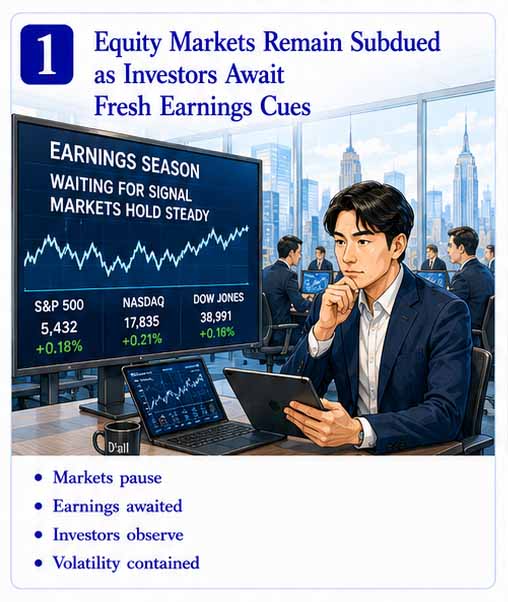
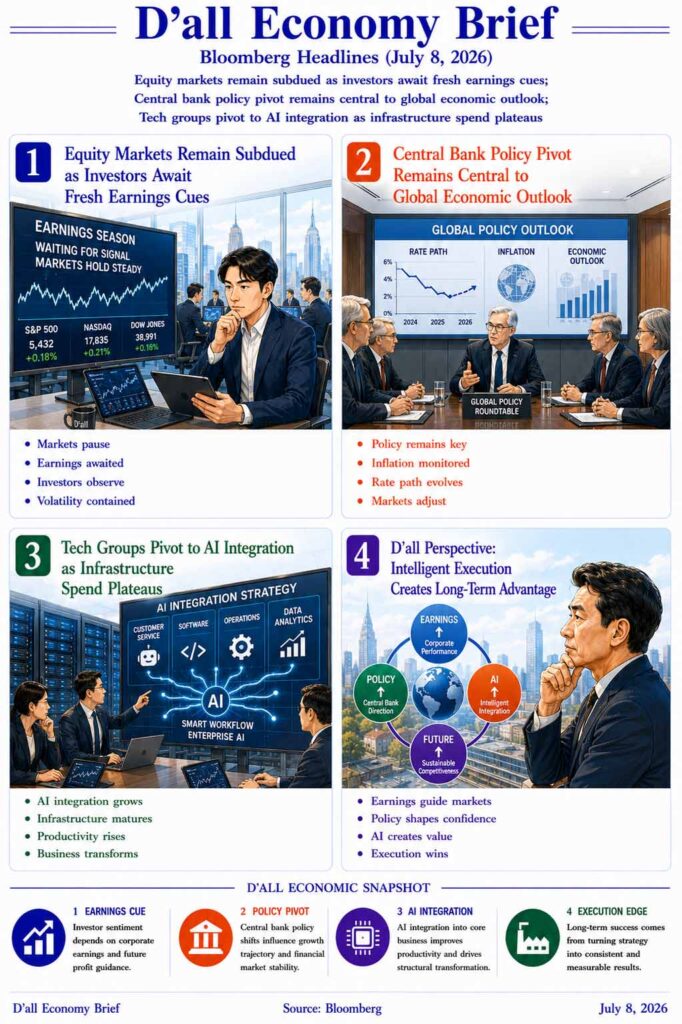
Earnings Cues | Equity Markets Remain Subdued as Investors Await Fresh Earnings Cues
Global equity markets traded within a narrow range as investors waited for fresh corporate earnings guidance.
Rather than reacting aggressively, institutional investors maintained balanced portfolios while assessing revenue expectations and future profit outlooks.
The market’s subdued movement reflects patience rather than weakness.
Corporate earnings are expected to become the primary catalyst for the next directional move.
As uncertainty remains moderate, disciplined positioning continues to dominate investment decisions.
• Markets pause
• Earnings awaited
• Investors observe
• Volatility contained
상반기 이후 시장은 방향성을 찾기보다 실적 발표를 기다리는 분위기가 강해지고 있다.
투자자들은 단기 상승보다 기업의 실제 성과와 향후 전망을 더욱 중요하게 평가하고 있다.
실적 시즌은 하반기 투자심리를 결정하는 핵심 변수가 될 가능성이 높다.
시장에서는 신중한 자산 배분과 데이터 중심의 의사결정이 이어지고 있다.
• 시장 숨 고르기
• 실적 발표 대기
• 투자자 관망세
• 변동성 제한
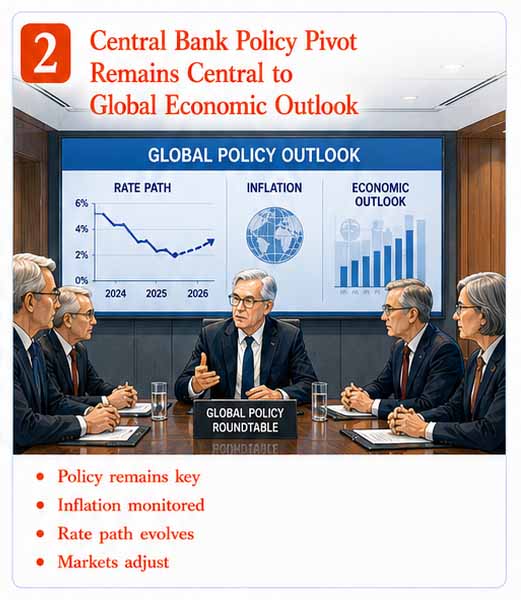
Policy Pivot | Central Bank Policy Pivot Remains Central to Global Economic Outlook
Central banks remain at the center of global economic expectations as investors continue searching for clearer signals on future monetary policy.
Inflation trends, employment data, and economic resilience will determine whether policy easing becomes possible later this year.
Financial markets increasingly respond to every policy statement because interest-rate expectations influence valuations across nearly every asset class.
The policy pivot is therefore no longer a single event but an evolving process that markets continue to monitor carefully.
• Policy remains key
• Inflation monitored
• Rate path evolves
• Markets adjust
중앙은행의 정책 방향은 여전히 글로벌 금융시장의 가장 중요한 변수로 작용하고 있다.
시장 참가자들은 물가와 고용지표를 중심으로 향후 금리 변화를 예측하고 있다.
정책 변화는 단기 이벤트가 아니라 지속적으로 진행되는 과정으로 이해되고 있다.
투자자들은 정책 불확실성 속에서도 균형 잡힌 전략을 유지하려 하고 있다.
• 정책이 핵심 변수
• 인플레이션 지속 관찰
• 금리 경로 변화
• 시장의 재조정
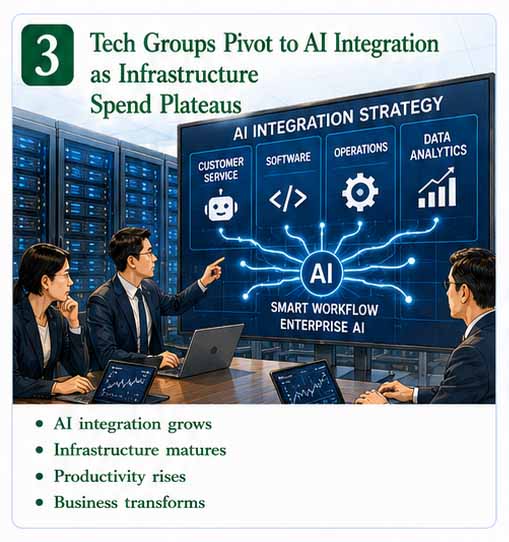
AI Integration | Tech Groups Pivot to AI Integration as Infrastructure Spend Plateaus
Technology companies are entering a new stage of artificial intelligence development. Instead of continuously increasing infrastructure investment, many organizations are focusing on integrating AI into products, enterprise software, customer services, and operational workflows.
This shift reflects a transition from building computing capacity to creating measurable business value.
Companies are seeking higher productivity, faster decision-making, and stronger customer experiences by embedding AI into everyday operations.
Artificial intelligence is evolving from an infrastructure project into a company-wide business capability.
The next competitive advantage will belong to businesses that successfully connect AI with practical execution.
• AI integration grows
• Infrastructure matures
• Productivity rises
• Business transforms
기술기업들은 AI 데이터센터를 계속 확대하기보다 실제 업무와 서비스에 AI를 연결하는 전략으로 방향을 바꾸고 있다.
AI는 고객 서비스와 소프트웨어, 데이터 분석, 업무 자동화 전반으로 빠르게 확산되고 있다.
기업 경쟁력은 더 많은 GPU가 아니라 더 높은 생산성을 만드는 AI 활용 능력으로 이동하고 있다.
하반기 AI 경쟁은 인프라 구축보다 실제 비즈니스 통합에서 승부가 갈릴 가능성이 높다.
• AI 통합 확대
• 인프라 투자 안정화
• 생산성 향상
• 비즈니스 혁신
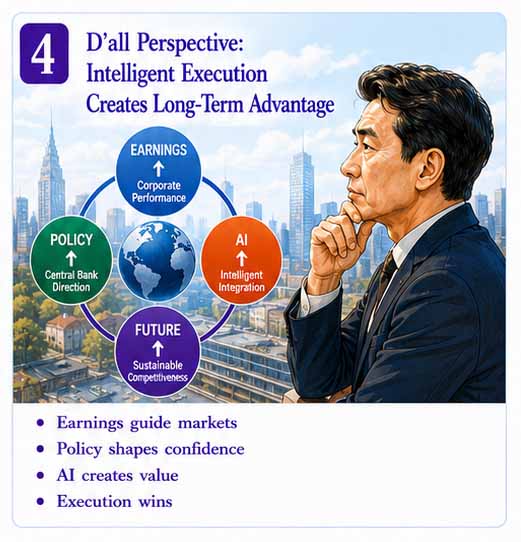
Intelligent Execution | D’all Perspective: Intelligent Execution Creates Long-Term Advantage
Financial markets, central bank policy, and AI transformation appear to be separate stories, yet they are connected by one structural theme—intelligent execution.
Markets are waiting for earnings because investors want measurable evidence rather than optimistic expectations.
Central banks continue adjusting policy according to incoming economic data instead of fixed assumptions.
Technology companies are also becoming more selective by shifting attention from infrastructure expansion toward AI integration.
Across all three themes, success depends on how effectively organizations execute strategy under changing conditions.
Execution transforms investment into productivity.
Execution converts policy into confidence.
Execution turns technology into competitive advantage.
The second half therefore belongs to organizations capable of combining discipline, adaptability, and innovation into sustainable growth.
• Earnings guide markets
• Policy shapes confidence
• AI creates value
• Execution wins
시장과 정책, AI는 서로 다른 이슈처럼 보이지만 결국 실행이라는 하나의 축으로 연결된다.
투자자는 실적을 통해 기업의 경쟁력을 확인하고, 중앙은행은 데이터에 따라 정책을 조정하며, 기술기업은 AI를 실제 비즈니스에 적용하는 단계로 이동하고 있다.
결국 시장은 계획보다 결과를, 투자보다 실행을 더욱 높게 평가하기 시작했다.
하반기의 경쟁력은 기술 자체보다 기술을 얼마나 효과적으로 활용하는가에 달려 있다.
• 실적이 시장을 이끈다
• 정책이 신뢰를 만든다
• AI가 가치를 창출한다
• 실행력이 승자를 만든다
Mini Insight
The next phase of AI competition will not be defined by infrastructure spending, but by intelligent integration and disciplined execution.
AI 경쟁의 다음 단계는 인프라 투자 규모가 아니라 얼마나 똑똑하게 통합하고 실행하는가에 의해 결정된다.
D’all Insight
Global markets are gradually moving from expectation-driven investing toward execution-driven evaluation.
Corporate earnings are becoming more important because they provide measurable evidence of business performance rather than optimistic forecasts.
Central banks continue relying on inflation and employment data, reinforcing a policy framework based on flexibility instead of fixed commitments.
Technology companies reveal the same structural transition through AI integration.
Rather than expanding infrastructure indefinitely, businesses are embedding artificial intelligence into operations where it can improve productivity and customer value.
This marks an important evolution in the AI economy.
Investment alone no longer guarantees competitive advantage.
Execution, integration, and operational excellence increasingly determine long-term success.
The second half is likely to reward companies capable of converting technology into measurable business outcomes while maintaining financial discipline.
Markets ultimately favor organizations that consistently execute better than their competitors.
글로벌 시장은 기대 중심의 투자에서 실행 중심의 평가로 점차 이동하고 있다.
기업 실적은 미래 기대보다 실제 경쟁력을 보여주는 가장 중요한 지표가 되고 있다.
중앙은행 역시 경제지표를 기반으로 유연하게 정책을 조정하며 시장 신뢰를 유지하려 하고 있다.
기술기업들은 AI 인프라 경쟁에서 AI 활용 경쟁으로 무게중심을 옮기고 있다.
AI는 이제 설비 경쟁이 아니라 생산성과 고객 가치를 높이는 핵심 도구가 되고 있다.
투자 규모만으로는 더 이상 경쟁우위를 만들기 어렵다.
실행력과 통합 능력, 운영 효율성이 장기적인 기업가치를 결정하는 시대가 시작되고 있다.
하반기 글로벌 시장은 기술을 얼마나 효과적으로 비즈니스 성과로 연결하는 기업인가를 더욱 중요하게 평가할 가능성이 높다.
One-line Insight
The future belongs to companies that integrate AI intelligently, execute consistently, and create measurable value.
미래의 승자는 AI를 가장 많이 구축한 기업이 아니라 가장 효과적으로 통합하고 실행하는 기업이다.
#EarningsCues #PolicyPivot #AIIntegration #FinancialTimes #GlobalMarkets #CorporateEarnings #CentralBank #EconomicOutlook #ArtificialIntelligence #BusinessTransformation #MarketAnalysis #TechnologyStrategy #OperationalExcellence #Productivity #DallEconomyBrief
#실적시즌 #정책전환 #AI통합 #파이낸셜타임스 #글로벌증시 #기업실적 #중앙은행 #경제전망 #인공지능 #디지털전환 #시장분석 #기술전략 #운영효율 #생산성 #디올이코노미브리프
Source
Financial Times (July 8)
This article is an editorial interpretation based on reporting from Financial Times. It expands the structural implications of current market developments through the analytical perspective of D’all Economy Brief rather than reproducing the original reporting.
- D'all Visual Intelligence
- D’all Public Design Intelligence
- D’all Motion Intelligence
- D’all Interaction Intelligence
- D’all Spatial Intelligence
- D’all Advertising Intelligence
- D’all Economy Brief
- D’all Food Intelligence
- D’all Health Insight
- D’all Global Power
- D’all Culture Hybrid
- D’all Knowledge Architecture
- D'all Capital History
- D’all Society Agenda
